
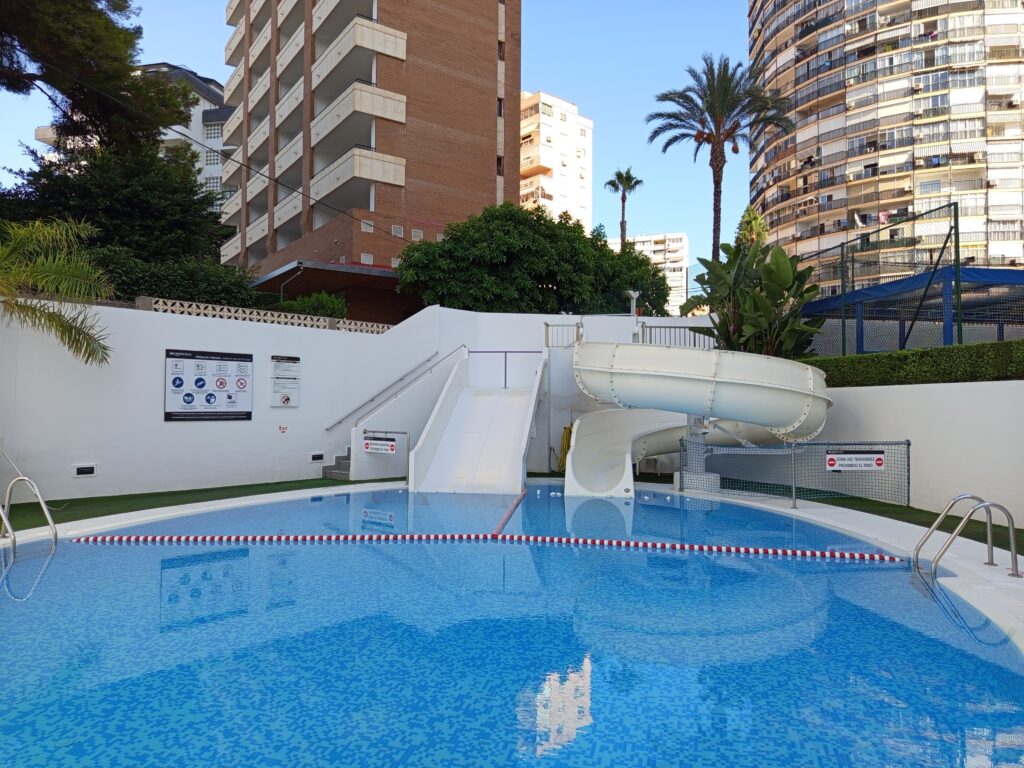
In tourist holiday resorts, the operational season begins well before the arrival of the first guest. For this reason, carrying out preventive technical inspections of each facility is of great importance, with water parks, swimming pools, and their surrounding areas being among the most critical points.
We have encountered situations in which these internal inspections, carried out by Technical Services and Maintenance teams, have been performed with such limited time in advance that there was barely any room for corrective action. This has ultimately led to critical safety concerns for guests or has required these issues to be addressed once visitors were already on site, potentially causing disruptions to the overall guest experience.
In the following sections, we will focus on the steps and actions that we recommend technical operational managers carry out in order to perform a preventive technical inspection of the water park and swimming pool facilities.
The internal procedure will focus on three main areas of action: verification of current regulations and technical documentation; inspection of structural elements; and validation of operational and safety signage.
Regulatory compliance and valid technical documentation
One of the most common mistakes when preparing for a new season is assuming that the existing technical documentation remains valid by default. Here you can find a post we have written on this topic regarding the documentation that every water park operator must have available in accordance with the applicable international regulations.
Many aquatic facilities may be operating, without realizing it, under outdated versions of regulations or with plans that no longer reflect what is actually installed. *Note: It may also occur that some establishments are missing certain documentation or, in some cases, have hardly any at all.
Before validating anything, it is advisable to review:
- Whether the applicable international regulations have undergone updates or interpretative changes.
- Whether the versions referenced in plans, technical sheets, and labels match the current installation.
- Whether any modifications have been implemented that are not reflected in the technical documentation.
It is also necessary to verify whether the manufacturers’ certificates for aquatic equipment are complete, whether there is traceability for recent modifications, and whether the latest internal maintenance reviews have been incorporated.
Structural inspection of the aquatic facility
During the off-season months, structures and equipment may have experienced slight movements, settling, or deterioration that may not be evident without a functional inspection. This is especially important in areas of repeated use or in elements that are dismantled and stored.
Recommended inspection by component type:
| Component | Elements to verify |
| Platforms and walkways | Clearances, deformations, transverse stability |
| Joints and fixings | Oxidation, pressure loss, replaced components |
| Stairs and access points | Friction coefficient, step height, structural rigidity |
| Anchoring and support points | Separation from the ground, signs of corrosion, mixed-material fixings |
It is not only about looking for obvious defects. It is essential to confirm that everything remains within the functional tolerances under which it was originally validated during initial commissioning.
Operational and safety signage for aquatic facilities
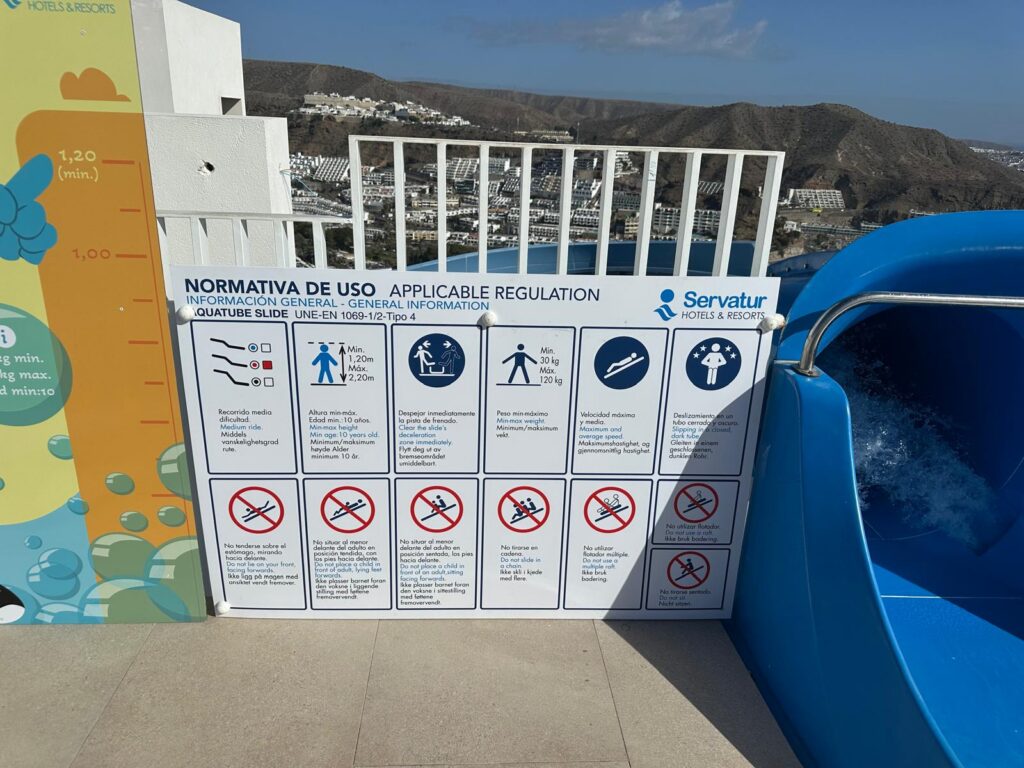
In previous posts, we have referred to the technical and regulatory criteria that safety signage in a water park must follow in order to comply with applicable standards. However, it may also happen that many signs meet visual requirements but fail operationally. They are visible, but poorly positioned. They provide information, but not at the right moment, or they may even contain details that no longer match the actual equipment in place.
Critical points to review:
- Positioning in relation to the point of use (it is not enough for signs to be nearby; they must be placed where access decisions are actually made).
- Up-to-date technical content and user instructions (in case of any operational modifications): minimum height requirements, restrictions, warnings, and usage instructions.
- Physical conditions for proper readability: contrast, layout, font size, and integrity of pictograms.
If you are in the process of preparing for the new season, we encourage you to carry out an internal preventive inspection of your aquatic facility. And if you would also like to perform a safety and regulatory compliance audit by an independent entity, please feel free to contact us or visit our dedicated page where you can find more information.
We will be delighted to assist you and support you with any need related to an aquatic leisure project. Continue exploring our blog to stay up to date with our latest news, technical articles, and projects.
